
Guide to Japan
Recognise Japan’s regions in GeoGuessr with 30 illustrated clues, from Hokkaidō’s hanging arrows to Okinawa’s utility-pole plates and transformers.
Explore Japan in the Atlas
Map of regional clues
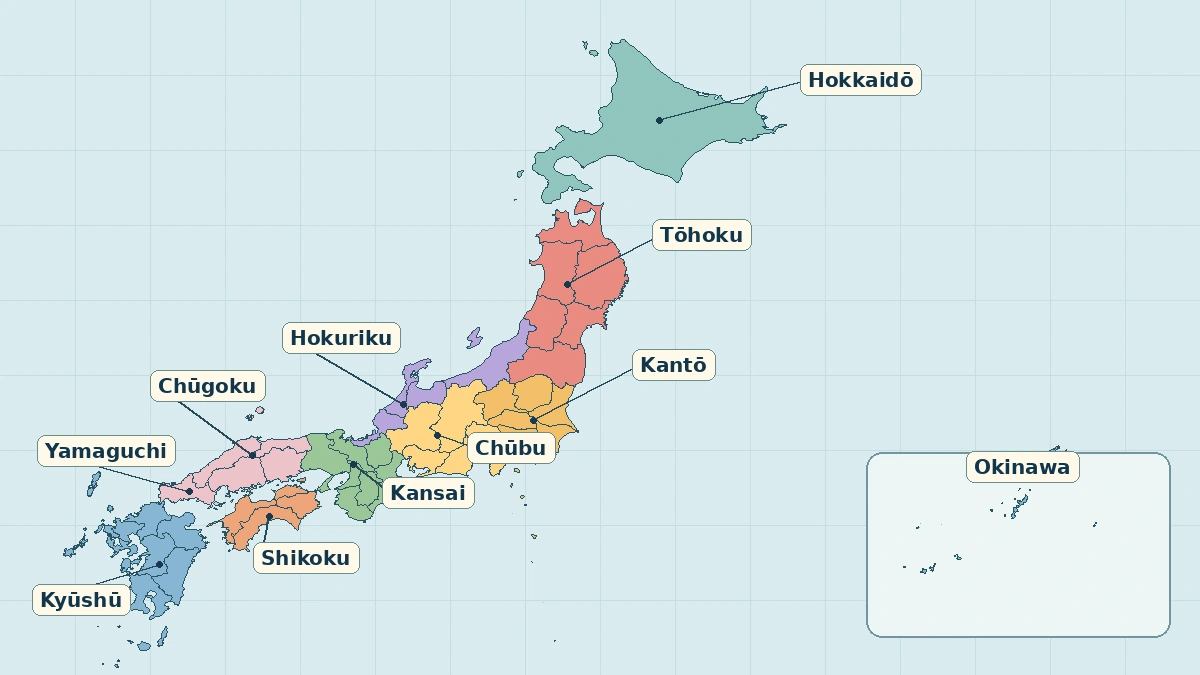
Use the map to get your bearings. The guide covers Yamaguchi separately within Chūgoku. Use several details where clues overlap.
Hokkaidō
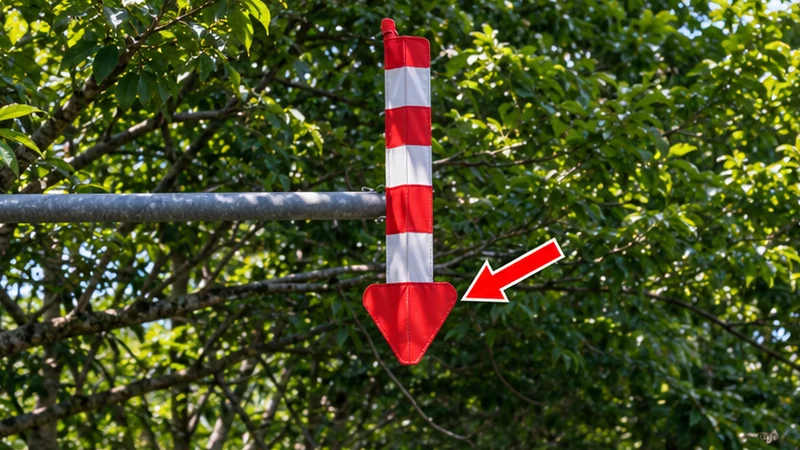
Hanging red-and-white arrow
Look above the verge for a downward arrow. It marks the road edge when snow covers it.
How to confirm it. Look for a row of arrows along the road. It is a strong Hokkaidō clue, with exceptions outside the island.
Hokkaidō
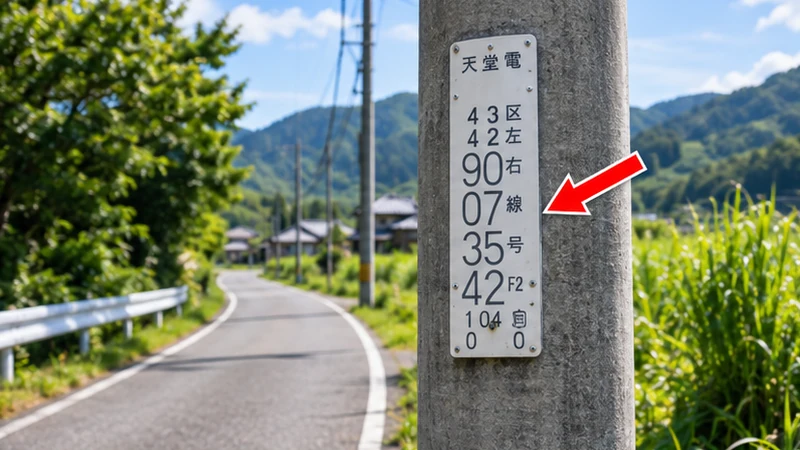
Long plate with stacked numbers
Look for a tall white pole plate with several rows of numbers.
How to confirm it. Compare the layout on a second pole and look for hanging verge arrows.
Tōhoku
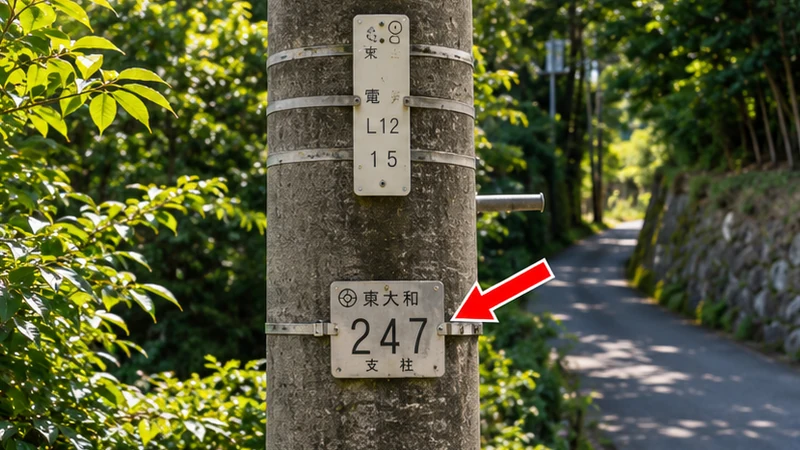
Stacked utility-pole plates
Look for the tall, narrow plate and a wider plate below it with a large number.
How to confirm it. Check the two plates together and compare reflectors on nearby poles.
Tōhoku
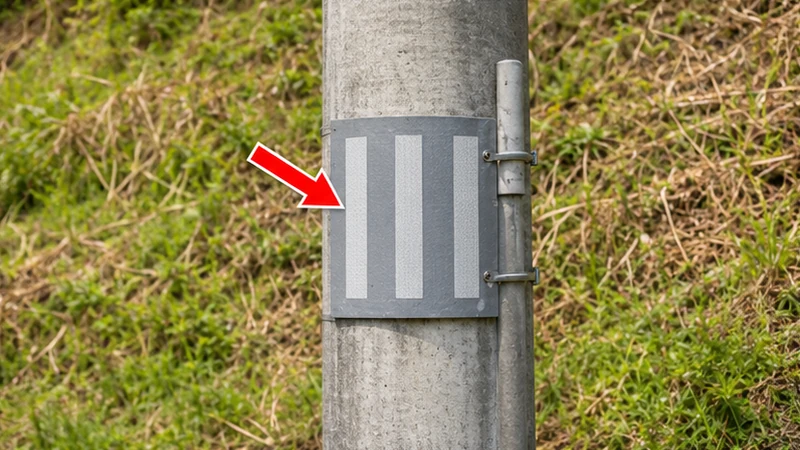
Grey band with pale vertical bars
Look low on the pole for the grey panel with pale vertical bars.
How to confirm it. Check the grey background and look for a consistent pole plate. Light and wear can alter the colour.
Kantō
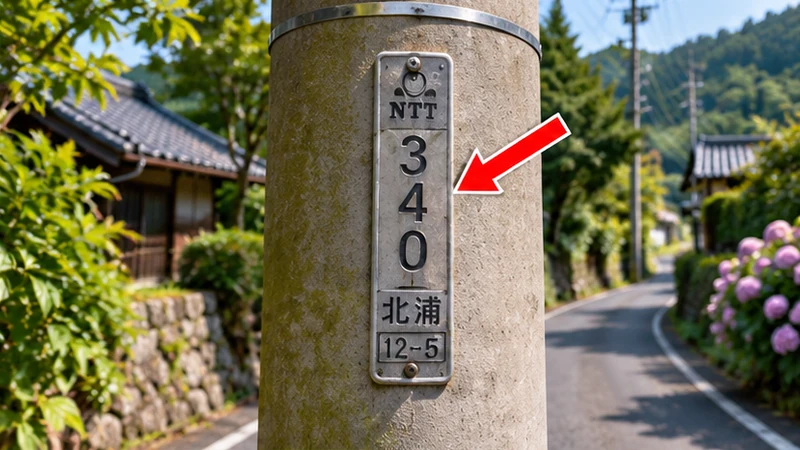
Narrow plate with a vertical code
Find the slender rectangular pole plate and study the vertical code layout.
How to confirm it. Compare its shape and layout with the rounded Chūbu example and check the insulators above.
Kantō
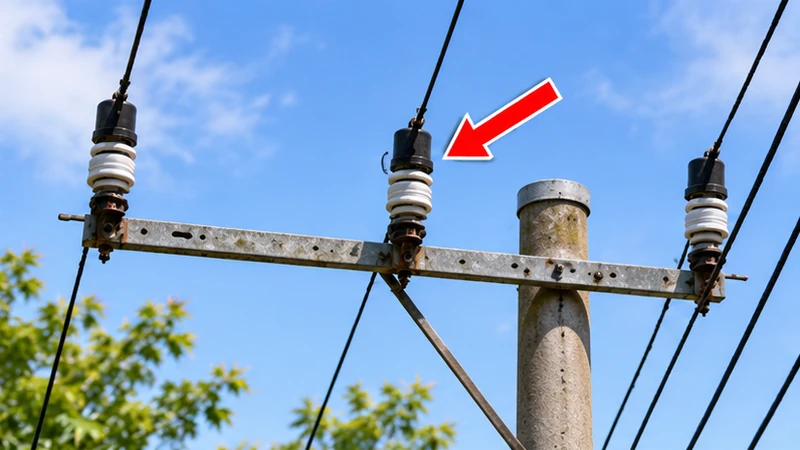
Tall insulators above the crossarm
Follow the horizontal arm to the upright insulators with tall dark caps.
How to confirm it. Compare their proportions, the arm and the plate together. A single distant insulator can mislead.
Chūbu
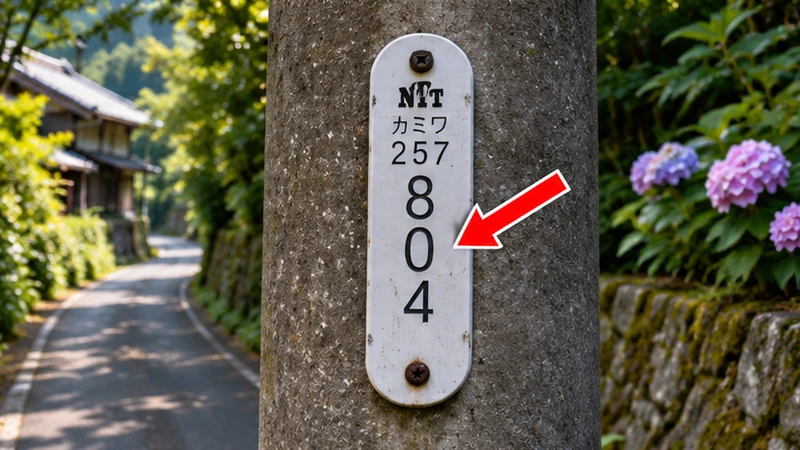
Rounded-end utility-pole plate
Look for a narrow plate with rounded ends and large vertically arranged digits.
How to confirm it. Compare the outline and layout on a second pole.
Chūbu
Triangular crossarm support
Look for slanting supports that form a triangle with the pole above the equipment.
How to confirm it. Check the triangle from another angle and compare the pole plate.
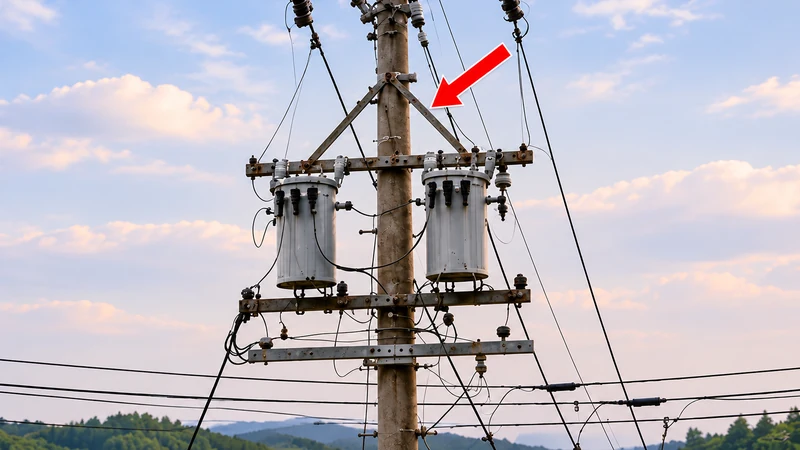
Hokuriku
Horizontal band-mounted plates
Notice how the two pale, wide plates follow the curve of the pole.
How to confirm it. Distinguish the horizontal layout from vertical designs and look for it on several poles.
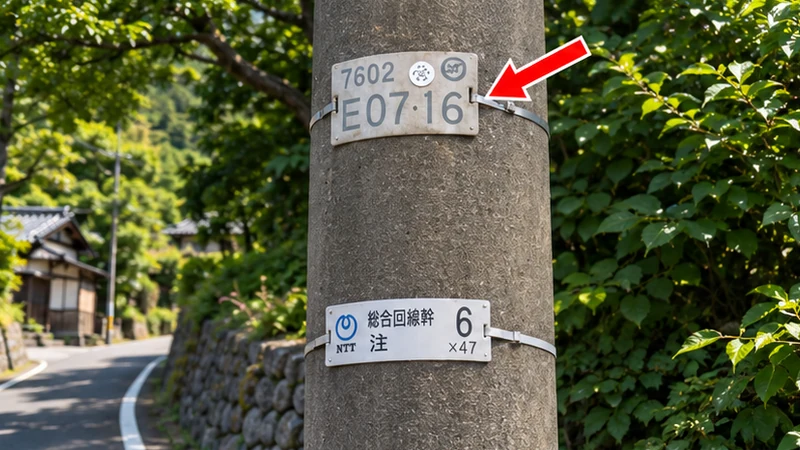
Kansai
Stepped crossarm with an open bend
Look for the change in height in the arm near the insulators.
How to confirm it. Compare the profile with the more square Shikoku bend and check it from another angle.
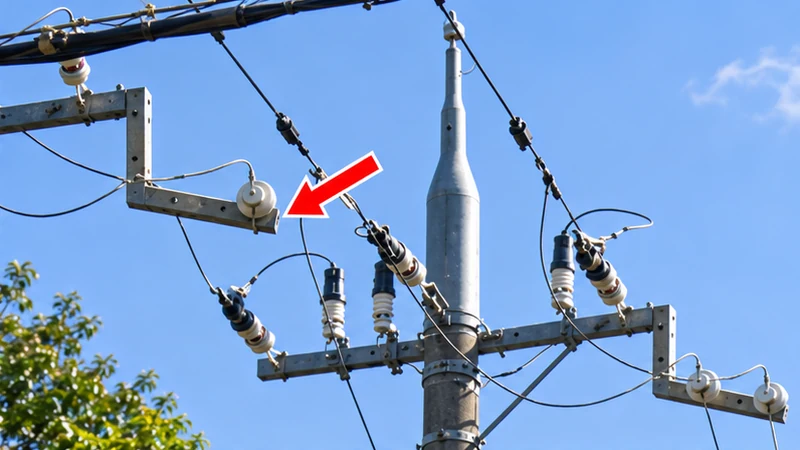
Kansai
Tall rectangular utility-pole plate
Look for the narrow light plate with writing in columns and fixings near the ends.
How to confirm it. Other areas have similar plates. Look for a stepped arm or the transformer arrangement as well.
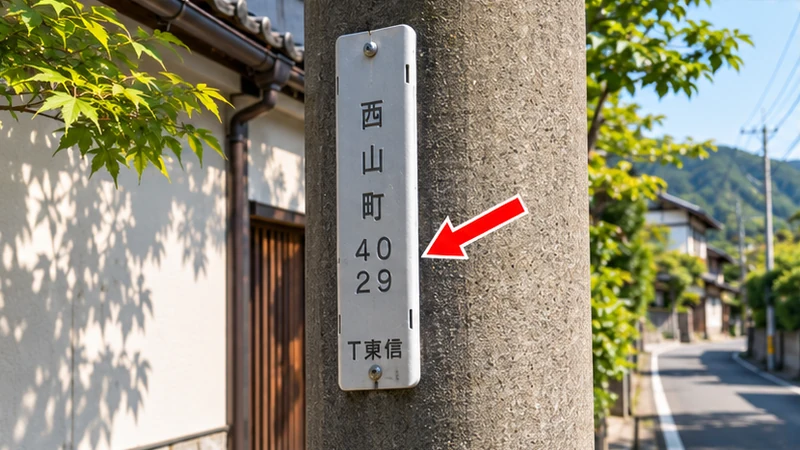
Kansai
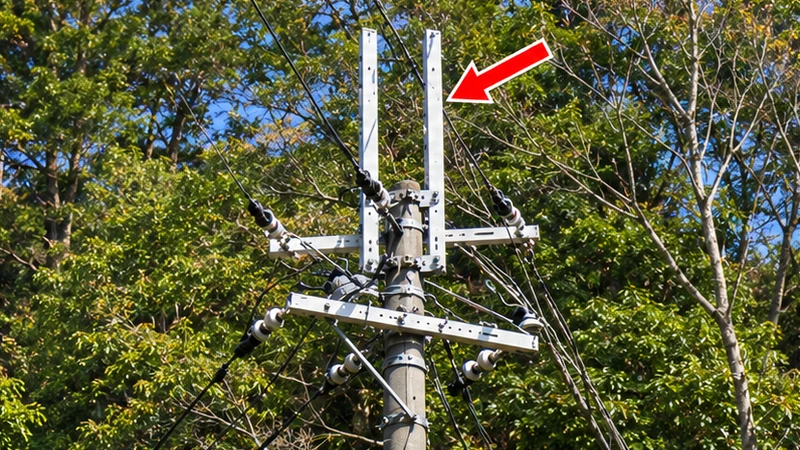
Pole top with two uprights
Look above the crossarms for two vertical elements side by side.
How to confirm it. Check the full arrangement of uprights and insulators. Foliage may hide one of them.
Kansai
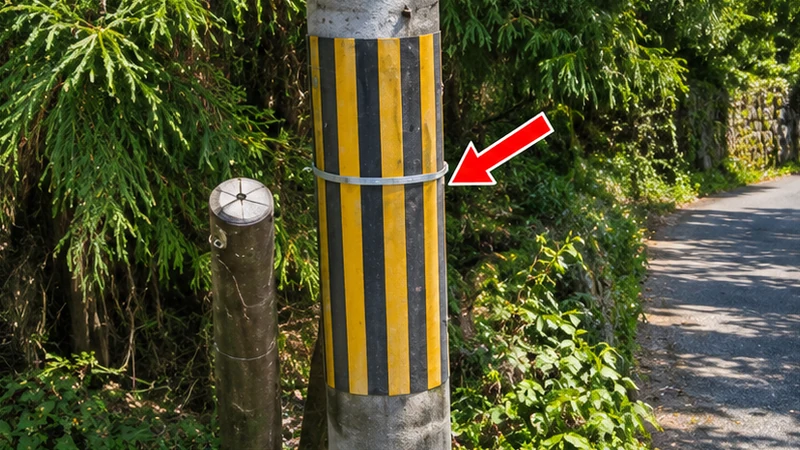
Tall yellow-striped band
Look for the long vertical wrap with narrow yellow stripes on a dark background.
How to confirm it. Compare its height, stripe width and mounting with Shikoku and Kyūshū examples.
Kansai
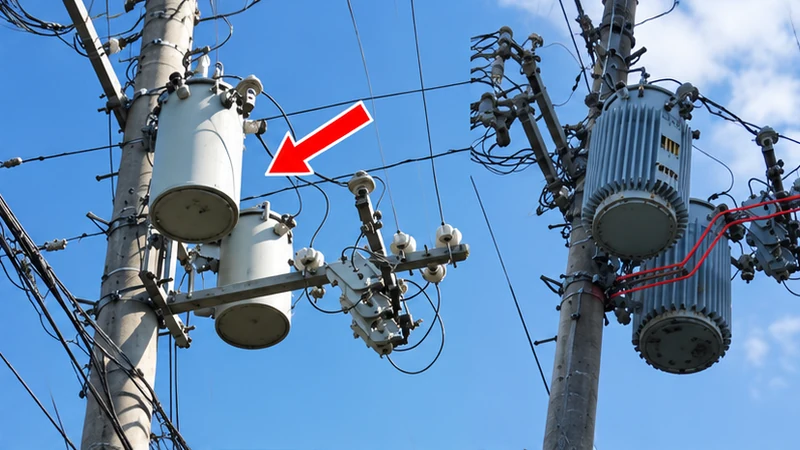
Transformers and their mounting
In the two examples, compare the cylinders and the arm holding the insulators.
How to confirm it. Check how the assembly attaches to the pole. Cylinders alone are a weak clue.
Chūgoku
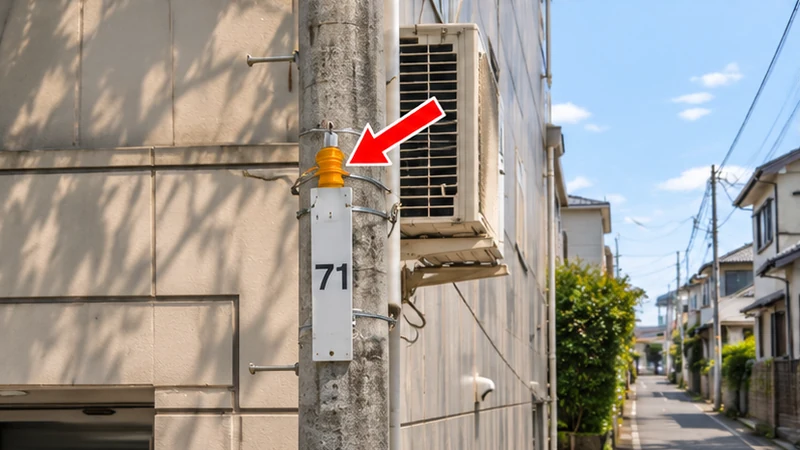
Orange arrow-shaped pole marking
Find the tiny orange marking and study its shape in the foreground.
How to confirm it. Use it as a local supporting clue. Compare the plate and hardware before choosing a region.
Chūgoku
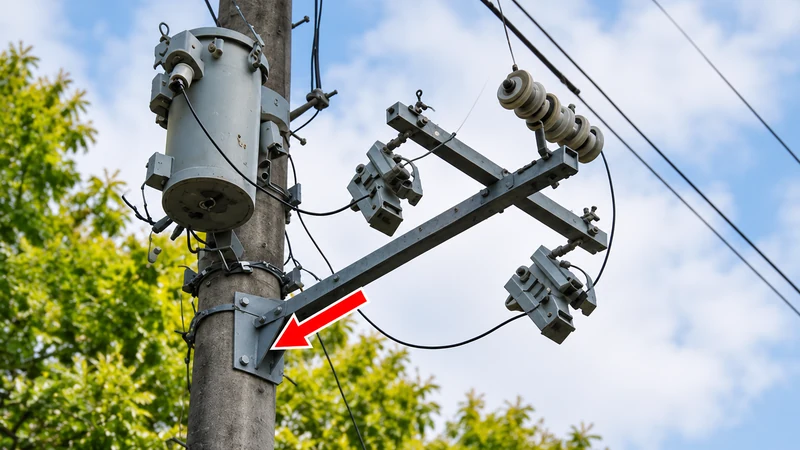
Crossarm with a full triangular brace
Trace the arm to the pole and look for the brace closing the triangle at the mounting point.
How to confirm it. Compare it with the partial brace in Shikoku. Study the mounting as well as the insulators.
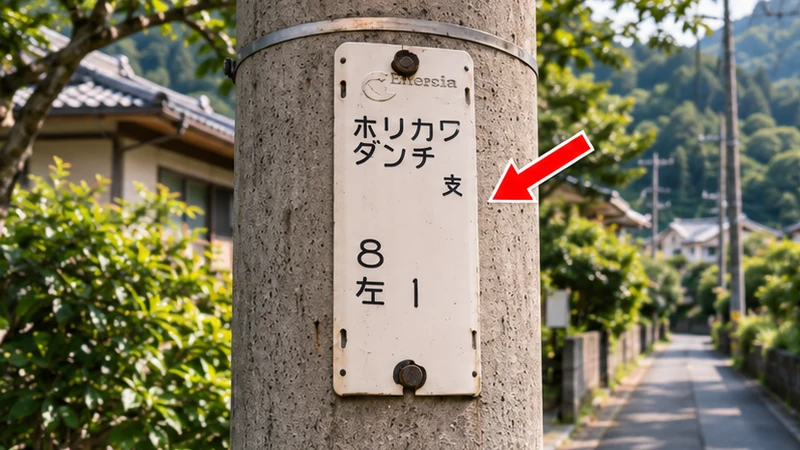
Chūgoku
Light plate with spaced lettering
Look for the pale front-facing plate with two holes and groups of characters along its length.
How to confirm it. Compare several poles. The wording can vary by locality.
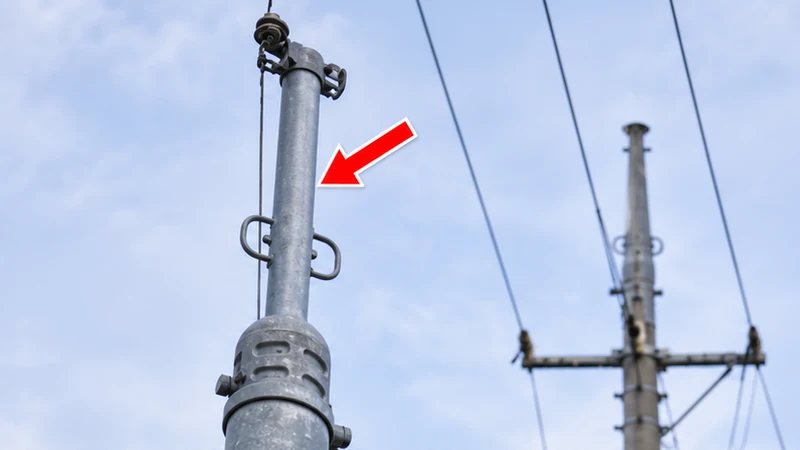
Chūgoku
Slender fitting at the pole top
In the left panel, look for the slender fitting with small side loops. Compare it with the thicker one on the right.
How to confirm it. Use the slender profile alongside the arm and plate. The thicker version is less distinctive.
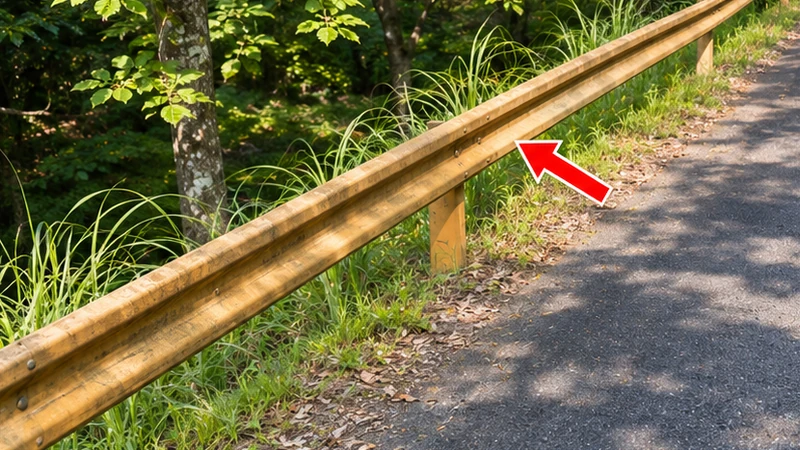
Yamaguchi
Ochre guardrail
Look at the roadside barrier. Ochre is useful on roads managed by Yamaguchi Prefecture.
How to confirm it. Check that the colour repeats along the barrier. Other guardrail colours also occur in the prefecture.
Shikoku
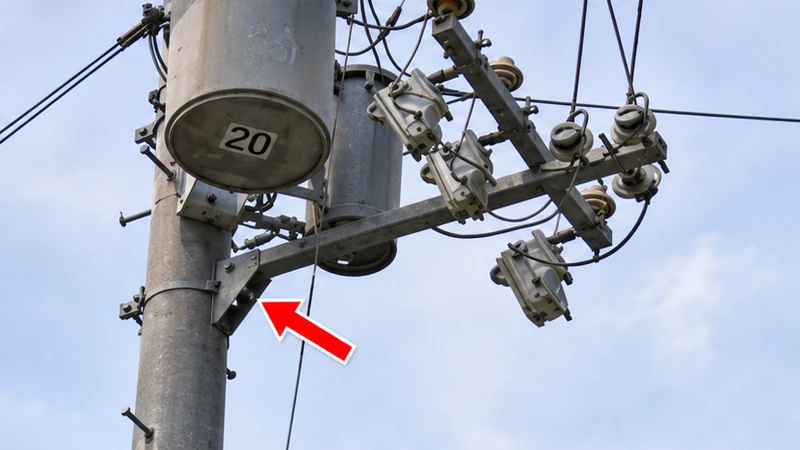
Crossarm with a partial brace
Look at the base of the crossarm for its partial triangular brace.
How to confirm it. Compare it with the full triangular brace in Chūgoku before deciding.
Shikoku
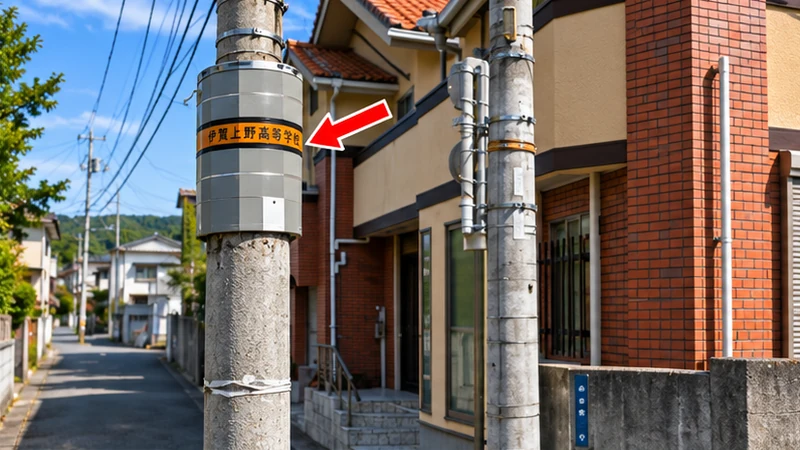
Coloured band on a post
On the foreground post, look for the small band around the post.
How to confirm it. Check for repetition along the road and combine it with pole plates or crossarms.
Shikoku
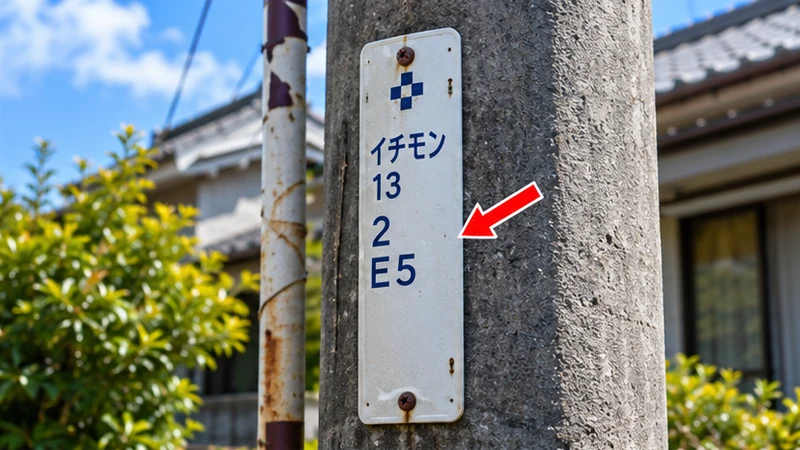
Plate with a symbol and stacked code
Look for the dark symbol near the top and the code running underneath.
How to confirm it. A blurred plate is easy to confuse. Check the crossarm on the same pole.
Shikoku
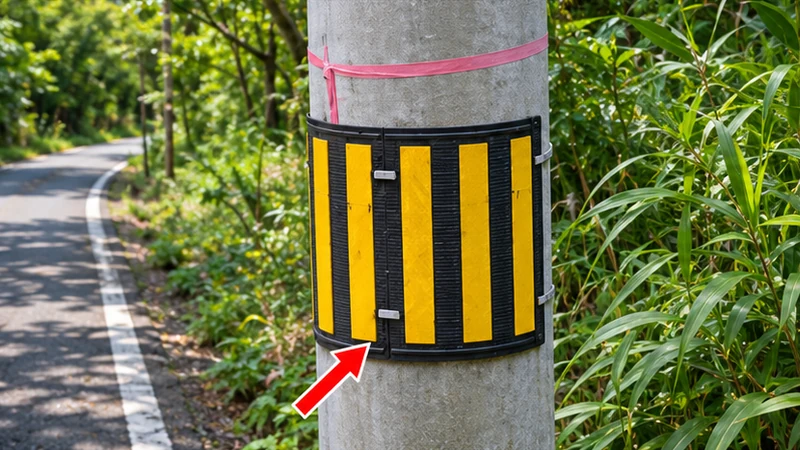
Low black-and-yellow wrap
Look for the low band with parallel yellow and black stripes.
How to confirm it. Compare its proportions with Kyūshū or Okinawa. Confirm with other pole details.
Kyūshū
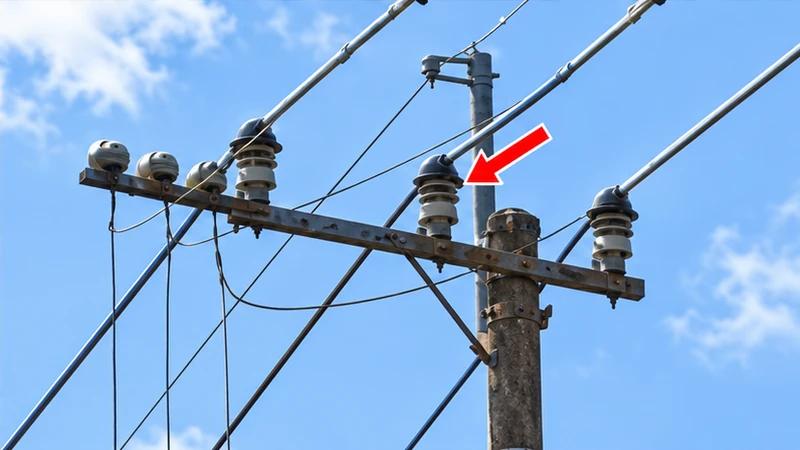
Bulky crossarm insulator
Look on the crossarm for the bulkier dark insulator highlighted in the example.
How to confirm it. Confirm its profile from another view and check the transformer arrangement.
Kyūshū
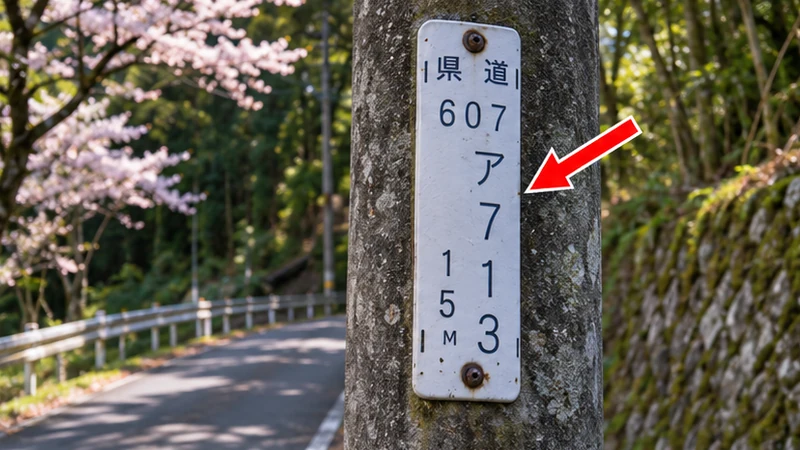
Narrow plate with a symbol at the top
Find the dark symbol and follow the column of digits below it.
How to confirm it. Compare several examples before deciding, since many Japanese pole plates use a vertical layout.
Kyūshū
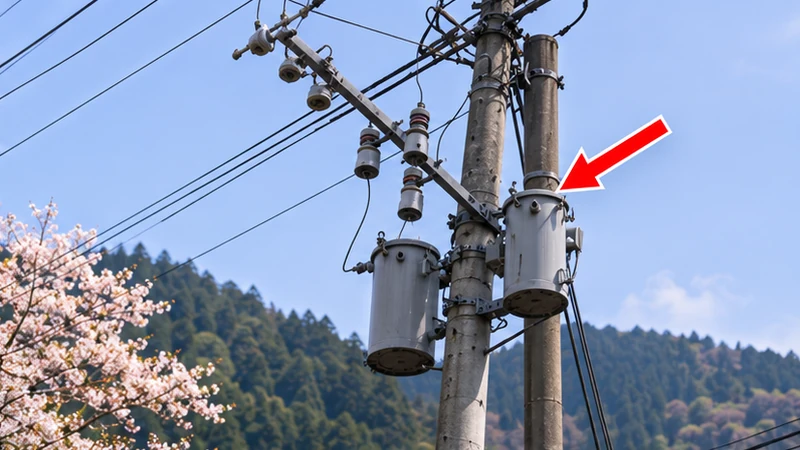
Transformers mounted on different sides
Look at the cylinders around the pole and their position relative to the crossarms.
How to confirm it. Compare the full assembly with Okinawa. The positions of the cylinders matter more than how many there are.
Kyūshū / Okinawa
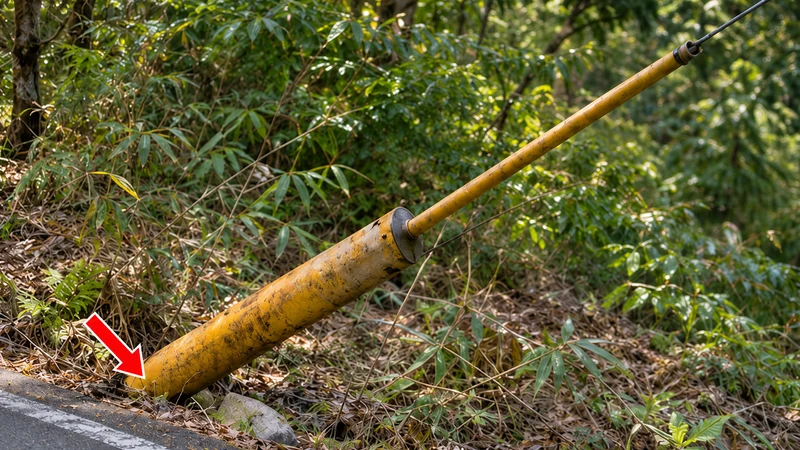
Sleeve on a diagonal guy wire
Near the ground, look for the thick sleeve on the slanted support wire.
How to confirm it. It is shared by Kyūshū and Okinawa. Use a plate or place name to separate them.
Kyūshū / Okinawa
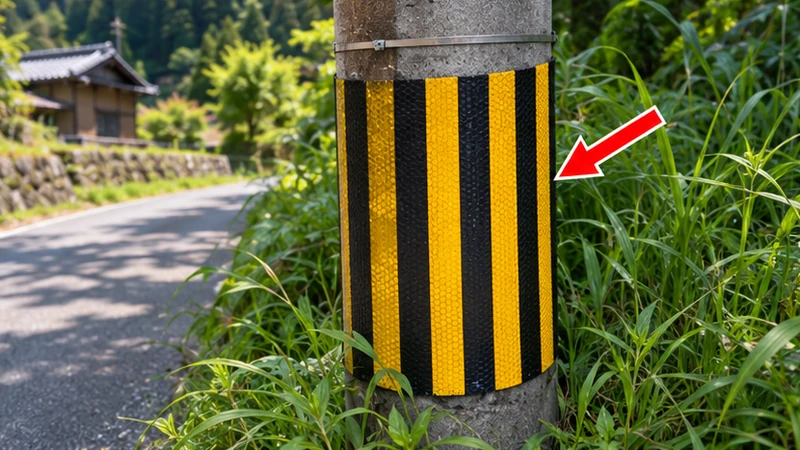
Low black-and-yellow striped band
Check the wrap at the foot of the pole and its alternating yellow and black stripes.
How to confirm it. Similar patterns occur elsewhere. Compare the stripe width and look at the nearby guy wire.
Okinawa
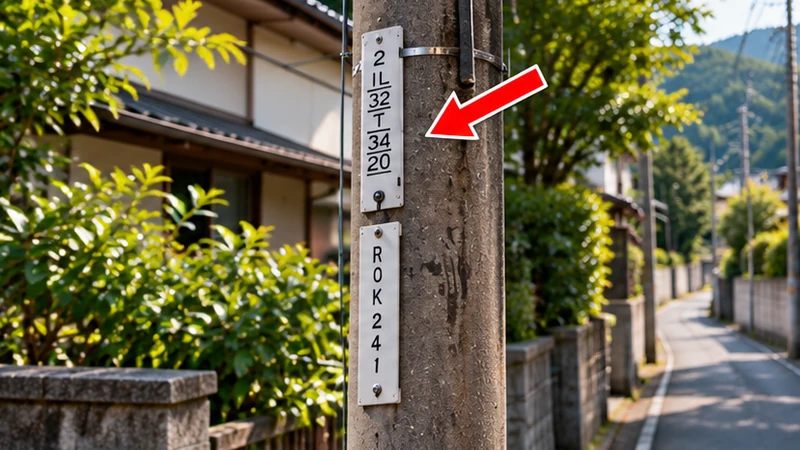
Two vertical plates in a column
Look for two long light plates mounted one above the other.
How to confirm it. Check that both elements are plates and look at the transformer configuration as well.
Okinawa
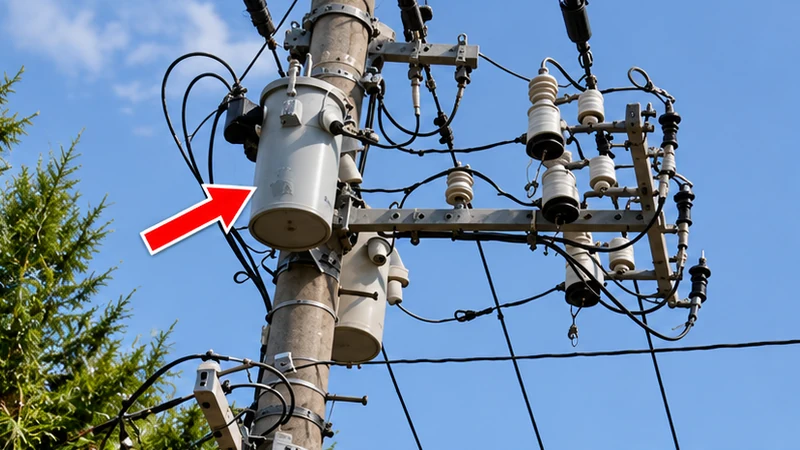
Transformers with a side frame
Trace the side frame towards the insulators and see where the cylinders sit relative to the pole.
How to confirm it. Compare the frame orientation with Kyūshū and look for a second clue.
The scenes are illustrative reconstructions. The lettering on plates is illustrative.