French and Dutch on one street sign
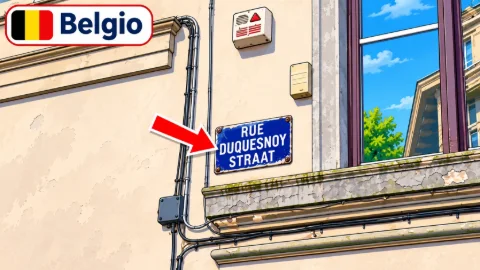
The panel contains RUE DUQUESNOY and STRAAT, illustrating the presence of French and Dutch.
Read the explanation and source
GeoPointer / By topic
Available cards: 51. Countries and territories represented: 45.
Writing helps only when its characters are actually readable. Compare alphabets, accents and complete sequences rather than assigning a language from one letter or confusing translations with local names.
These examples show how the catalogue describes the same topic in different places. Inclusion here does not make one country more likely than another.
The panel contains RUE DUQUESNOY and STRAAT, illustrating the presence of French and Dutch.
Read the explanation and sourceDirection arrows have white backgrounds with black borders and tips, with Arabic and Latin lettering on separate lines.
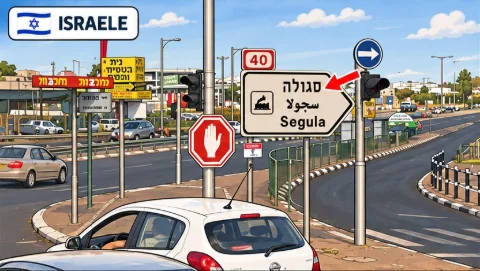
Read the explanation and sourceLook for Hebrew alongside Arabic and Latin lettering on direction signs.
Read the explanation and sourceLook for ARRÊT on the red octagonal sign. Pair this French-language clue with other evidence for Québec.
Read the explanation and sourceThese cautions belong to the referenced cards. Keep each feature tied to its context, particularly when sources describe variants or unclear imagery.
The video describes regional language tendencies. One bilingual urban sign cannot establish a region.
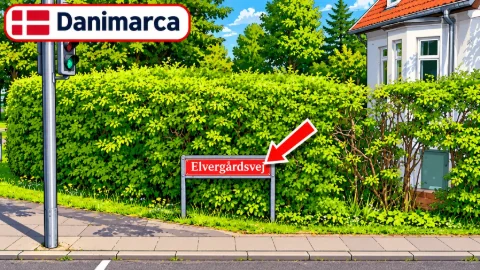
The observed spelling is vej. The letter ø is also used in Norwegian.
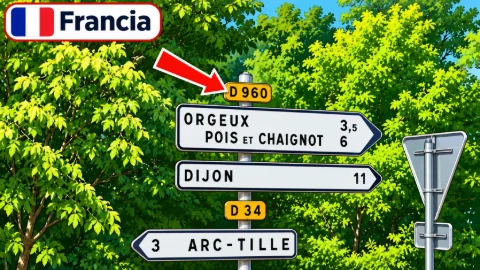
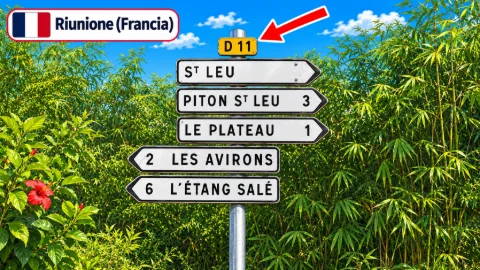
Not all French roads start with D. Use the letter, number and panel format together.
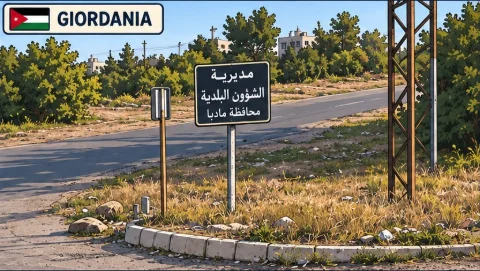
Not every small character is reliably transcribable from this copy, although the script remains recognisable.
The images are teaching reconstructions. Individual cards provide sources and context when available. This catalogue does not cover every variation worldwide; references to imagery do not verify current coverage.
Counts describe collected cards, not how frequently features occur on the ground. Open a country guide or select its cards on this topic.
Cards: 1
Country guide Cards on this topicCards: 1
Country guide Cards on this topicCards: 1
Country guide Cards on this topicCards: 1
Country guide Cards on this topicCards: 3
Country guide Cards on this topicCards: 1
Country guide Cards on this topicCards: 1
Country guide Cards on this topicCards: 2
Country guide Cards on this topicCards: 1
Country guide Cards on this topicCards: 1
Country guide Cards on this topicCards: 1
Country guide Cards on this topicCards: 1
Country guide Cards on this topicCards: 1
Country guide Cards on this topicCards: 1
Country guide Cards on this topicCards: 1
Country guide Cards on this topicCards: 1
Country guide Cards on this topicCards: 1
Country guide Cards on this topicCards: 1
Country guide Cards on this topicCards: 1
Country guide Cards on this topicCards: 1
Country guide Cards on this topicCards: 1
Country guide Cards on this topicCards: 1
Country guide Cards on this topicCards: 1
Country guide Cards on this topicCards: 1
Country guide Cards on this topicCards: 1
Country guide Cards on this topicCards: 2
Country guide Cards on this topicCards: 1
Country guide Cards on this topicCards: 1
Country guide Cards on this topicCards: 2
Country guide Cards on this topicCards: 1
Country guide Cards on this topicThe panel contains RUE DUQUESNOY and STRAAT, illustrating the presence of French and Dutch.
Explore this clueStreet names end in vej, and direction signs show ø. Together they help recognise a Danish-language setting.
Explore this clueD960 and D34 appear on small yellow or yellow-orange panels above white direction arrows, indicating departmental routes.
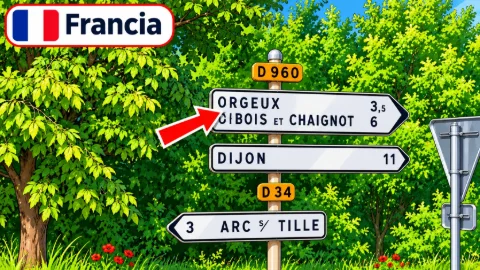
Explore this clueORGEUX and BOIS illustrate letter groups that can help recognise French place names.
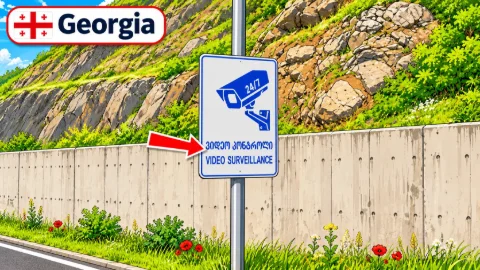
Explore this clueThe sign uses rounded Georgian lettering distinct from both Latin and Cyrillic scripts.
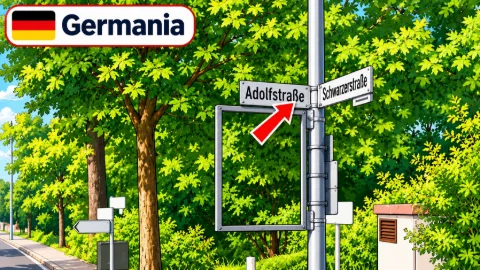
Explore this clueAdolfstraße illustrates ß, a letter that unfamiliar readers may mistake for B.
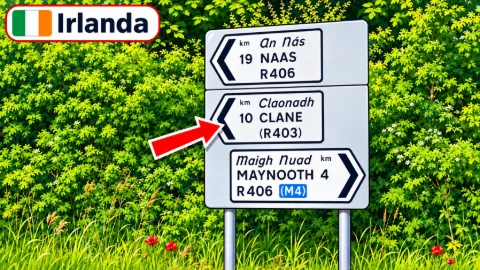
Explore this clueThe panels pair names such as An Nás / NAAS and Maigh Nuad / MAYNOOTH, alongside route R406.
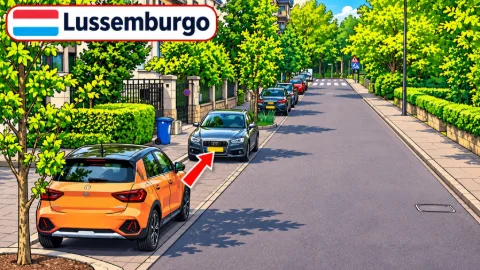
Explore this clueParked cars have yellow plates while the street name is French, used together to distinguish Luxembourg from the Netherlands.
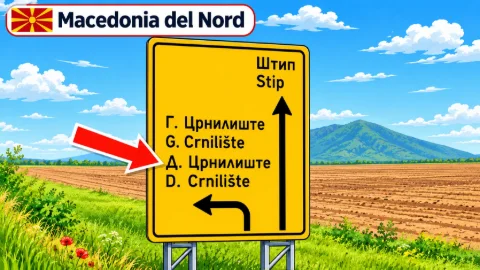
Explore this clueThe yellow sign pairs Cyrillic names with Latin transliterations and abbreviations beside them.
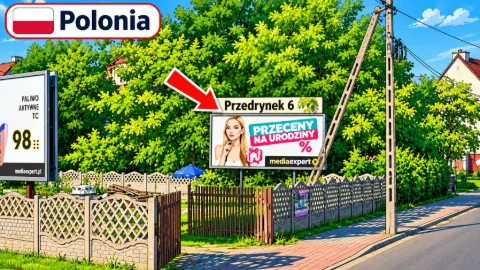
Explore this clueWords on signs contain clusters such as prz, alongside frequent z and y.
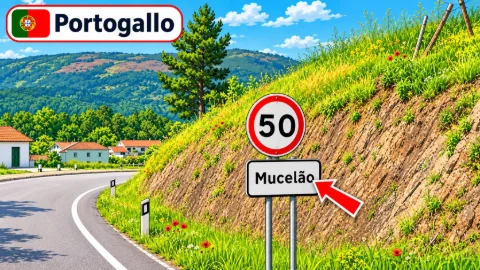
Explore this clueMucelão illustrates a tilde over a, with other Portuguese characters mentioned in the guide.
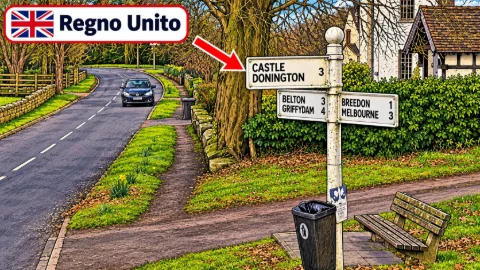
Explore this clueCastle Donington, Melbourne and Belton illustrate English text in a British setting.
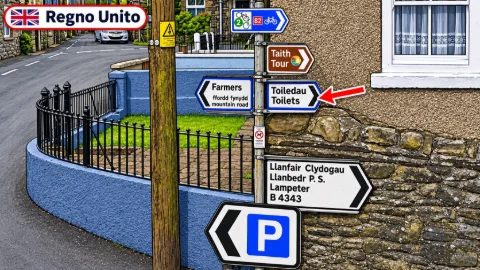
Explore this clueToiledau / Toilets and Welsh letter groups such as ll and ff appear on bilingual signs.
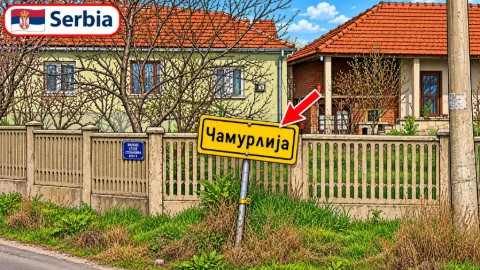
Explore this clueThe entry panel is rectangular and yellow, with a black border and Cyrillic lettering.
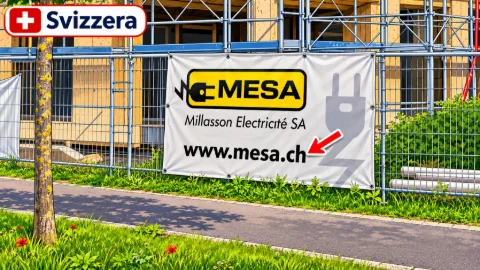
Explore this clueThe advertisement reads www.mesa.ch; .ch is highlighted for Switzerland rather than Czechia.
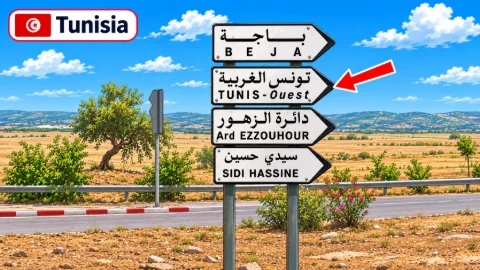
Explore this clueDirection arrows have white backgrounds with black borders and tips, with Arabic and Latin lettering on separate lines.
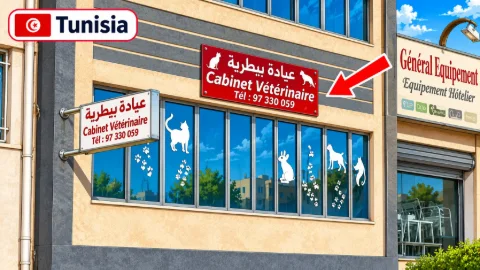
Explore this clueArabic writing is widespread in the shown scenes, with French words also visible on signs and businesses.
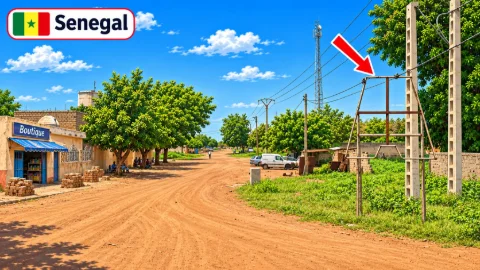
Explore this clueFrench writing appears with utility poles resembling French designs, including an example with a top crossarm.
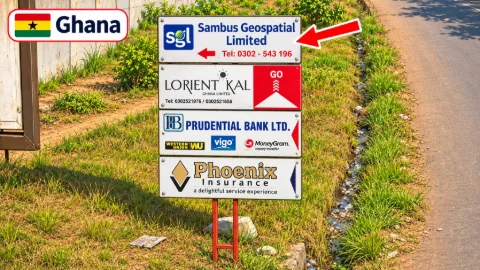
Explore this clueLook for English on road signs and businesses in the illustrated Ghanaian scenes.
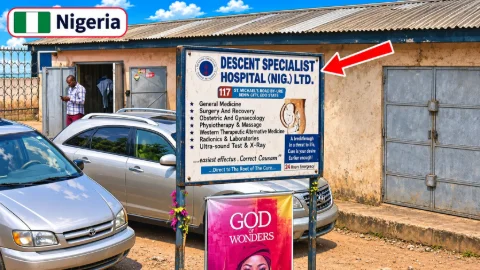
Explore this clueThe guide encourages looking for English text in Nigerian urban scenes, as in Ghana.
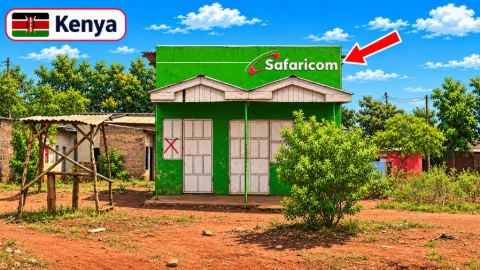
Explore this clueLook for the Safaricom name on shopfronts and advertising in the Kenyan examples.
Explore this clueRéunion is introduced as a French territory. French direction signs include D11 on a small yellow route panel.
Explore this clueLook for Hebrew alongside Arabic and Latin lettering on direction signs.
Explore this clueSeek a different kind of support: two details on the same object are not necessarily two independent pieces of evidence.
Study clues by topic