Carrer on street-name signs
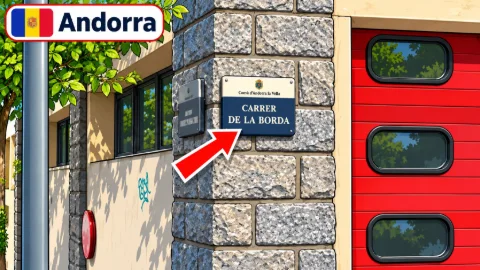
The street sign illustrates carrer, a Catalan word contrasted with French rue and Spanish calle.
Read the explanation and source
GeoPointer / By topic
Available cards: 43. Countries and territories represented: 30.
Street plates combine language, shape and text arrangement. A familiar word may occur in several countries: study the full name, house number and layout together.
These examples show how the catalogue describes the same topic in different places. Inclusion here does not make one country more likely than another.
The street sign illustrates carrer, a Catalan word contrasted with French rue and Spanish calle.
Read the explanation and sourceLook for abbreviations such as TP. or H. and the city or province name. Archived imagery may show subdivisions from before the 2025 reform.
Read the explanation and sourceCompare the shape, colours and text layout with this example from Aracaju, Sergipe.
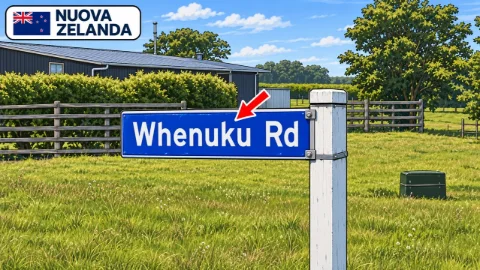
Read the explanation and sourceNew Zealand often uses blue street signs with white text, particularly in rural areas. While street signs of other colours can be often seen, blue is by far the most common.
Read the explanation and sourceThese cautions belong to the referenced cards. Keep each feature tied to its context, particularly when sources describe variants or unclear imagery.
Carrer also appears in Catalan-speaking parts of Spain; it is not exclusive to Andorra.
Do not confuse it with a larger street-name sign. The similarity to France is intentional.
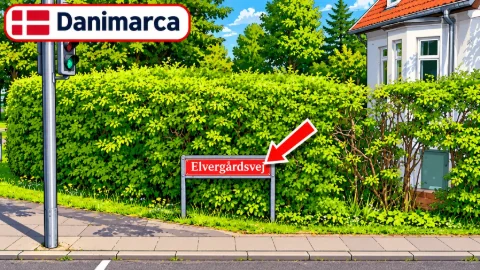
The observed spelling is vej. The letter ø is also used in Norwegian.
Read the word in its sign context rather than relying on an isolated letter sequence.
The images are teaching reconstructions. Individual cards provide sources and context when available. This catalogue does not cover every variation worldwide; references to imagery do not verify current coverage.
Counts describe collected cards, not how frequently features occur on the ground. Open a country guide or select its cards on this topic.
Cards: 1
Country guide Cards on this topicCards: 3
Country guide Cards on this topicCards: 9
Country guide Cards on this topicCards: 1
Country guide Cards on this topicCards: 1
Country guide Cards on this topicCards: 1
Country guide Cards on this topicCards: 1
Country guide Cards on this topicCards: 1
Country guide Cards on this topicCards: 2
Country guide Cards on this topicCards: 1
Country guide Cards on this topicCards: 1
Country guide Cards on this topicCards: 1
Country guide Cards on this topicCards: 1
Country guide Cards on this topicCards: 1
Country guide Cards on this topicCards: 1
Country guide Cards on this topicCards: 1
Country guide Cards on this topicCards: 1
Country guide Cards on this topicCards: 1
Country guide Cards on this topicCards: 1
Country guide Cards on this topicCards: 1
Country guide Cards on this topicCards: 1
Country guide Cards on this topicCards: 1
Country guide Cards on this topicCards: 2
Country guide Cards on this topicCards: 1
Country guide Cards on this topicCards: 1
Country guide Cards on this topicCards: 2
Country guide Cards on this topicCards: 1
Country guide Cards on this topicCards: 1
Country guide Cards on this topicCards: 1
Country guide Cards on this topicCards: 1
Country guide Cards on this topicThe street sign illustrates carrer, a Catalan word contrasted with French rue and Spanish calle.
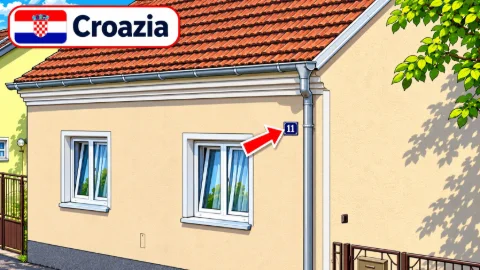
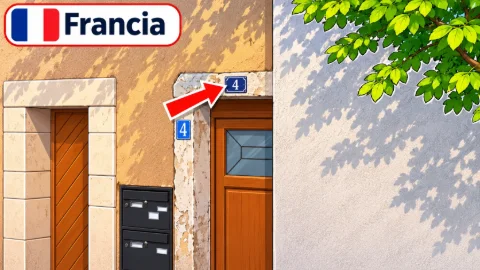
Explore this clueA small dark house-number plaque is attached to a pale wall, described as navy blue and compared with French plaques.
Explore this clueStreet names end in vej, and direction signs show ø. Together they help recognise a Danish-language setting.
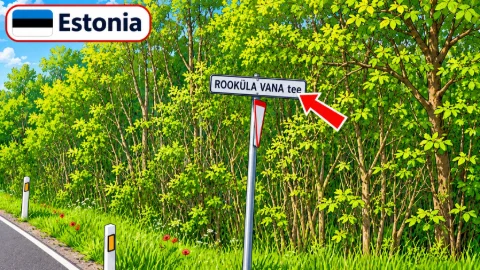
Explore this clueThe sign reads ROOKÜLA VANA tee. Look for tee or the abbreviation tn in Estonian street names.
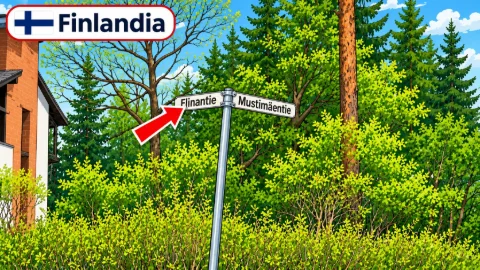
Explore this clueElinantie and Mustimäentie illustrate tie as a Finnish street-name ending.
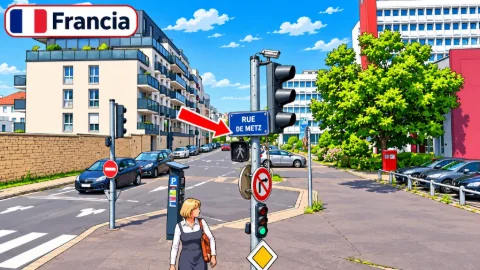
Explore this clueRUE DE METZ illustrates the French street word rue and a blue street-name plaque.
Explore this clueA close-up shows a white number on a dark blue plaque, explicitly compared with Croatia.
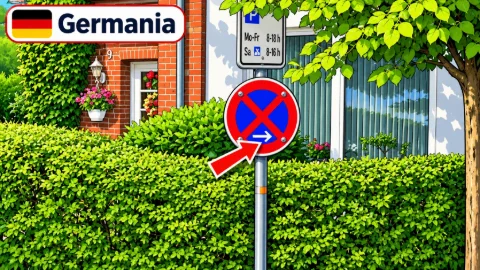
Explore this clueSmall white arrows appear inside blue and red circular restriction signs in urban scenes.
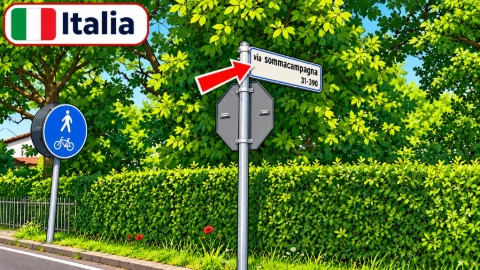
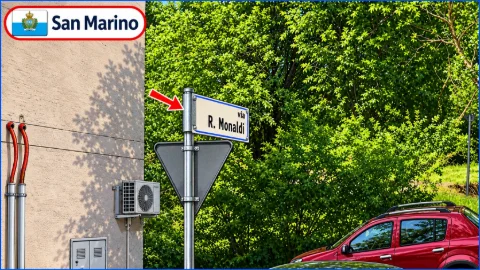
Explore this clueA light street-name plaque has a dark blue border and the word via; the video compares the layout with San Marino.
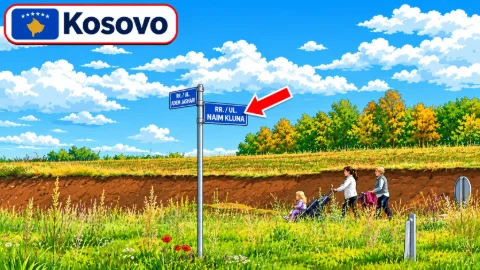
Explore this clueThe blue sign places RR. / UL. above the street name, referring to Albanian Rruga and Serbian Ulica.
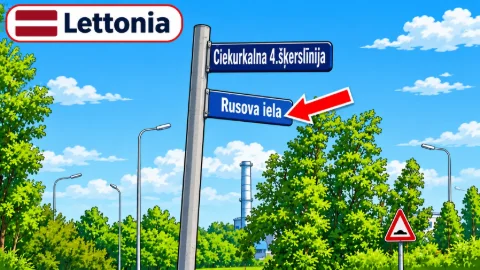
Explore this clueRusova iela illustrates the Latvian word iela, compared with Estonia's tee and Lithuania's g.
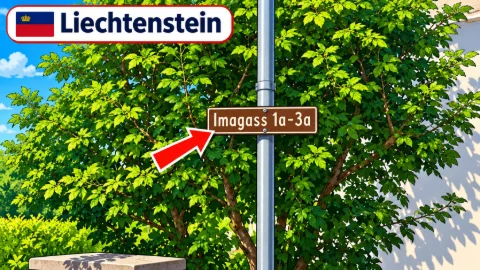
Explore this clueThe street-name sign has a brown background and thin pale lettering, with pale framing and black or blue variants mentioned.
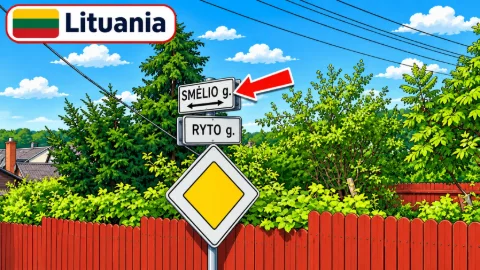
Explore this clueSMĖLIO g. and RYTO g. illustrate the Lithuanian street abbreviation g.
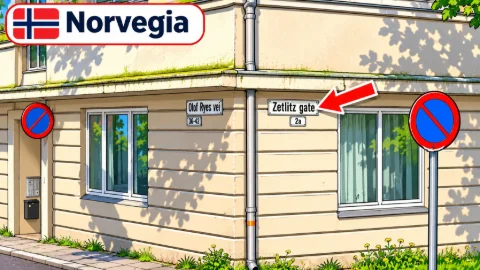
Explore this clueThe guide highlights these Norwegian street-name forms alongside other urban details.
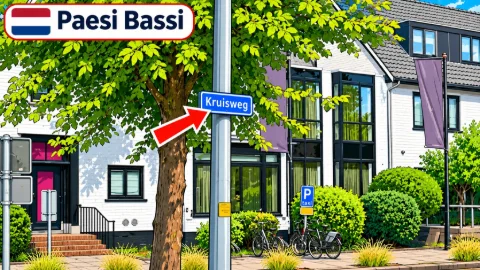
Explore this clueKruisweg illustrates weg; the guide also highlights straat with double a and Dutch vowel combinations.
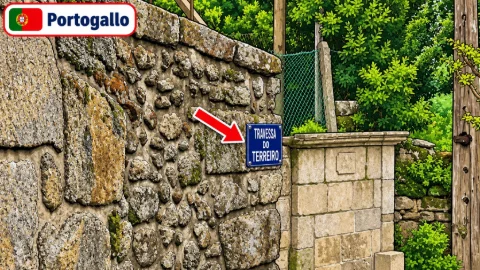
Explore this clueA blue-and-white plaque shows RUA, compared with Spain's calle.
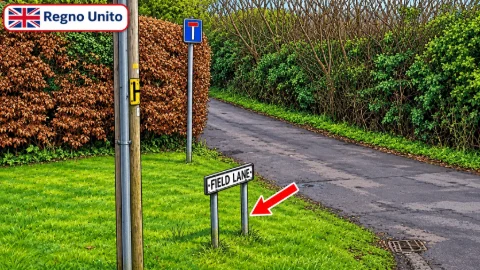
Explore this clueTRENCH LANE appears on a pale panel mounted low on two short uprights.
Explore this clueA close-up of V. Masi illustrates a metal edge or reinforcement, contrasted with Italian street signs.
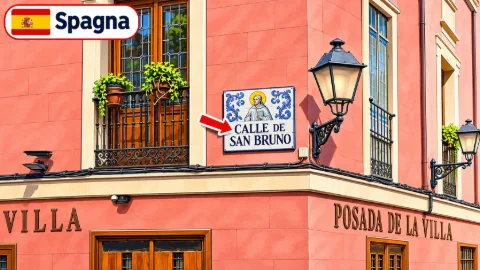
Explore this clueA blue number plaque is followed by a CALLE sign, compared with French rue and Andorran carrer.
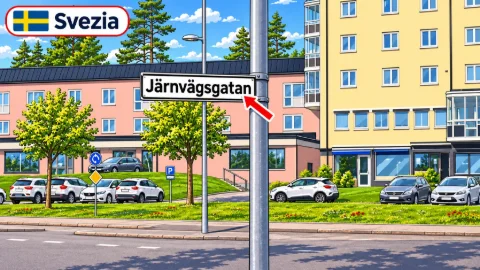
Explore this clueThe street plaque illustrates gatan, while vägen and abbreviations g or v are also mentioned.
Explore this clueNew Zealand often uses blue street signs with white text, particularly in rural areas. While street signs of other colours can be often...
Explore this clueSeek a different kind of support: two details on the same object are not necessarily two independent pieces of evidence.
Study clues by topic